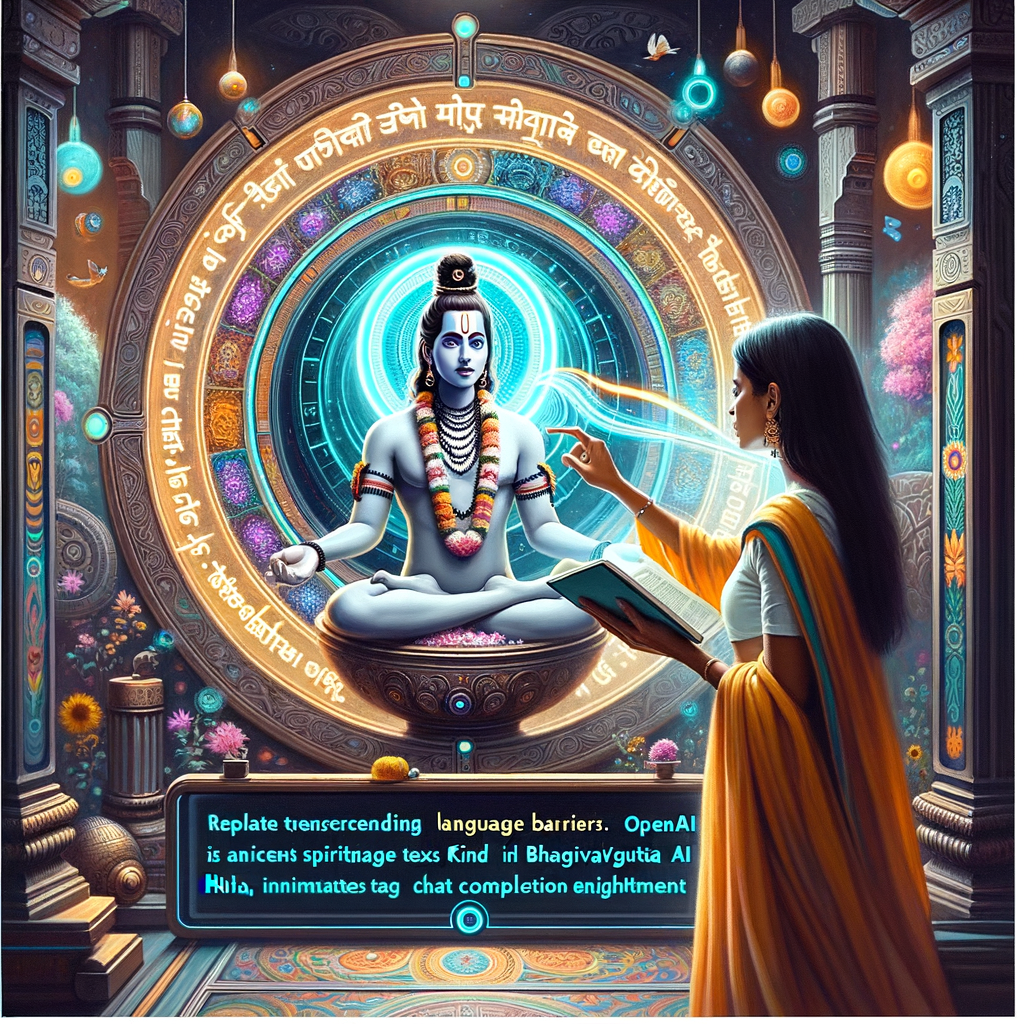
Technology seamlessly intertwines with everyday life in this age, which makes it exciting to explore the Vision Capability of OpenAI Chat API for spiritual texts. It is fascinating to see how artificial intelligence (AI) can support us in our spiritual journeys. Imagine exploring the depths of ancient spiritual writings like the Bhagavad Gita, beautifully scripted in Hindi and Sanskrit, without needing to learn the language first. In this blog, I walk you through how I used OpenAI’s chat completion API and its vision capability to test whether AI can help us understand these sacred texts more deeply.
By experimenting with different prompt styles and image inputs, I wanted to discover how far the Vision Capability of OpenAI Chat API for spiritual texts can really go. Could it decode meanings hidden inside complex Devanagari script? Could it summarize and interpret spiritual ideas for readers who do not know Hindi or Sanskrit? Ultimately, the goal was to see if this approach could open new paths for spiritual growth and enlightenment, even for people who do not read these languages fluently.

Explore the Vision Capability of OpenAI Chat API for Spiritual Texts
To truly explore the Vision Capability of OpenAI Chat API for spiritual texts, I started with visual excerpts from the Bhagavad Gita. These pages acted as snapshots of a profound spiritual dialogue between Arjuna and Lord Krishna. Instead of feeding plain text into the model, I used images of the scripture and converted them to base64-encoded data. This allowed the OpenAI Chat API with vision to “see” the actual page, including Sanskrit verses and Hindi commentary, and then respond based on what it recognized.
This experiment provided a practical way to measure the Vision Capability of OpenAI Chat API for spiritual texts in real conditions. Alongside the encoded images, I tested a variety of prompts. Some were extremely simple, while others included detailed context, chains of thought, and reasoning. This step-by-step approach helped reveal how much the model could infer on its own, and how much better it performed when guided more carefully by the user.
Simple Vision Prompt: “What’s in the image?”
First, I wanted to see how far the model could go with the most basic instruction. So I gave it the base64-encoded image and used a single, simple question as my prompt. This helped me observe the Vision Capability of OpenAI Chat API for spiritual texts without extra hints or guidance.
Simplest prompt:
Whats in the image?
The response was surprisingly detailed. Without extra context, the model still recognized that the image contained a page from a Hindi spiritual text with Sanskrit verses and their explanations in Hindi. It even understood that the content looked like a religious or philosophical scripture, very likely the Bhagavad Gita, and noted that the page included sections where Arjuna speaks (“अर्जुन उवाच”) along with commentary.
Model’s reply (summary):
This image shows a page from a Hindi text, which includes Sanskrit verses and their explanations in Hindi, likely from the Bhagwat Gita. The page includes section titles like 'Arjuna Uvach' and detailed explanations that interpret the spiritual significance and practical implications of the verses.
This first experiment already showed that the vision capability is not just reading pixels; it can recognize structure, language, and spiritual context. As a result, it became clear that using the Vision Capability of OpenAI Chat API for spiritual texts has real potential, even with minimal prompting.
Providing Context with the Encoded Image Prompt
Next, I wanted to see what would happen if I gave the model a bit more guidance. Instead of only asking “What’s in the image?”, I added a short description of the scene from the Bhagavad Gita. In particular, I mentioned that Arjuna is speaking to Sri Krishna and struggling with seeing his cousins on the opposing side in battle. This was another way to stretch the Vision Capability of OpenAI Chat API for spiritual texts by mixing image input with higher-level context.
This image contains snippet of Bhagwat Gita where arjun is asking sri krishna the problem he is facing watching his cousins as his opponents.
Once that context was included, the model’s response became even richer. It moved beyond simply identifying the script and layout, and started to interpret the emotional and philosophical layers of the text. The AI described Arjuna’s moral dilemma, his hesitation to fight, and the deeper themes of duty, righteousness, and spiritual guidance that Krishna later explains.
This image contains a passage from the Bhagavat Gita, where Arjuna is speaking to Lord Krishna about the difficulties he faces as he sees his relatives and teachers in the opposing army. The model explains Arjuna’s inner conflict, his compassion, and how this moment sets the stage for Krishna’s spiritual teachings on duty and the nature of the self.
By simply adding a little context, the experiment showed that we can explore the Vision Capability of OpenAI Chat API for spiritual texts in a much deeper way. The model not only read the image but also connected it to the broader narrative and core teachings of the Bhagavad Gita.
Combining Vision, Context, and Reasoning Prompts
To push the exploration further, I started crafting more advanced prompts. These included sample questions and answers, extra reasoning steps, and even a short description of the kind of reader this blog is for. Each time I enriched the prompt, the model delivered more detailed and more nuanced explanations of the verses on the page. This confirmed that the Vision Capability of OpenAI Chat API for spiritual texts is strongest when paired with thoughtful, context-rich instructions.
This layered prompting approach helped unlock deeper insights from the same image. Instead of just surface-level description, the AI began to explain why Arjuna felt torn, how Krishna’s advice connects to spiritual concepts like detachment and duty, and why these ideas still matter today. In doing so, the experiment highlighted just how powerful OpenAI’s vision tools can be for anyone interested in sacred literature.
What the Vision Capability of OpenAI Chat API Means for Spiritual Seekers
Through these experiments, it became clear that we can genuinely explore the Vision Capability of OpenAI Chat API for spiritual texts such as the Bhagavad Gita in a way that breaks down language barriers. Even if you do not read Hindi or Sanskrit, AI can help you access, summarize, and interpret sacred passages, while still preserving the original script and structure.
Of course, AI should not replace traditional study, teachers, or personal contemplation. However, it can act as a powerful assistant, giving you a starting point for reflection and helping you connect with wisdom that might otherwise feel locked behind unfamiliar scripts and languages. This approach also opens practical applications for scholars, translators, and spiritually curious readers across the world.
If you are interested in more ways AI can transform how we learn and grow, you might also like my posts on using AI for income and mindset, such as my The Billionaire Blueprint book review on the AI gold rush. Together, these explorations show how the Vision Capability of OpenAI Chat API for spiritual texts and other AI tools can serve both our material goals and our spiritual curiosity when used thoughtfully.






Leave a Reply